Holiness is wholeness for modern life
Kevin Liston 21 July 2026
Personal Values
Personal values are central to how we live and are expressed accurately in behaviour, often inadvertently.
Much is written and spoken about Catholic social values (or Catholics Social Teaching) but we seem to hear little about Catholic personal values which are just as important.
Living by both is the heart and soul of being Christian.
Becoming better persons
As social values are aimed at making the world a better place, personal values are geared towards making ourselves better persons.
Traditionally this was described as holiness or being holy. Now it resonates more as wholeness or fullness of life.
Building authentic character
Celebrating our faith and relationships with our Creator, Jesus and the Spirit are important but we must not overlook the values that make our faith and relationships real and provide reasons for celebration.
With quality personal values in our kitbag, we become authentic persons interiorly.
Faith, hope and love are primary.
Other such values include integrity, being responsible, intelligent and reasonable, courage (parrhesia) and personal freedom (cf. Galatians).
With such features defining our spirituality we can have confidence in who we are before God and the world.
Values for community
Personal values are complemented by social values, the stuff of relationships, that characterise the communities and society we dream of: the value of every human, the common good, participation, option for the poor, solidarity, subsidiarity and care for the natural environment.
We are not aimless, purposeless drifters on the face of the Earth.
With the Spirit of God in our hearts, we say, ‘Let’s kindle the fire of love and together we will renew the world.’
Everyday spirituality counts
The everyday commitment to living these values is often overlooked in a rush to celebrate and a disproportionate focus on the details of how we do so.
The everyday spirituality of being people of integrity and creating a better world for all is too often shrouded in a mist of forgetfulness while archaic traditions that have long since lost their meaning are reenacted with fine precision.
In these changing times, we need to remember that life comes from life.
Everyday spirituality is the fertile soil from which a bountiful harvest will be gathered in.
Jesus was revolutionary and dynamic in his vision and thinking: when he said ‘Remember me’ he surely hoped for his followers to be equally creative.
Everyday spirituality for seekers
Kevin Liston 5 July 2026
A sense of uncertainty runs through much of discussion on faith and spirituality these days. Are you settled or seeking?
Most spiritual formation assumes people already have a vocabulary for faith – a settled sense of belief, belonging, and direction. But many of us live somewhere else: seeking something we can’t quite name, unsettled by a hunger we don’t know what to do with, aware that the old answers don’t quite fit anymore but not yet sure what does.
It began in security, the certainty of a spirituality and theology that enveloped all our activities, comings and goings and relationships. It framed and defined our worlds.
Somehow, somewhere along the way, questions arose that did not have easy answers. We felt a restlessness, hunger, a sense that something was missing or deeply desired. This was the honest starting point. We became seekers, on the move.
What it means to be human: Taking charge of your living
Kevin Liston
A sense of uncertainty runs through much of discussion on faith and spirituality these days. Are you settled or seeking?
Most spiritual formation assumes people already have a vocabulary for faith – a settled sense of belief, belonging, and direction. But many of us live somewhere else: seeking something we can’t quite name, unsettled by a hunger we don’t know what to do with, aware that the old answers don’t quite fit anymore but not yet sure what does.
It began in security, the certainty of a spirituality and theology that enveloped all our activities, comings and goings and relationships. It framed and defined our worlds.
Somehow, somewhere along the way, questions arose that did not have easy answers. We felt a restlessness, hunger, a sense that something was missing or deeply desired. This was the honest starting point. We became seekers, on the move.
Mind and brain are not the same thing
This is about how our minds work – or how we use our minds. The brain is the biological organ inside our skulls. A healthy brain is required for conscious human experiencing, sensing, feeling, memory, imagining, etc. Our minds go beyond just experiencing.
The focus here is not on what we are thinking or deciding about (the objects), but on ourselves as agents (or subjects) of those operations. For example: What are you doing when you are knowing? This differs from the See-Judge-Act approach which is generally related to an objective situation. However, my approach parallels Cardijn’s method in that both are based on patterns of experience, knowing and deciding but Cardijn’s focus is on the exterior while mine is interior.
[1] I use the terms ‘mind’ and ‘mental activity’ instead of Lonergan’s term, ‘consciousness’ in this paper. Consciousness has been used in recent decades by various writers with a range of meanings different from that intended by Lonergan in the 1960-70s.
An evolving personal spirituality is
reshaping Catholic identity
Kevin Liston
Since the mid-1900s, there has been a significant shift among Catholics to thinking of faith and spirituality in personal terms. Questions of authority, conscience and community remain central.
Previously, Catholic theology often leaned toward universal principles, fixed ways of thinking and a more institutional emphasis. Vatican II, influenced by thinkers such as Yves Congar, Henri de Lubac, Karl Rahner and Bernard Lonergan, brought attention to the personal experience of Catholics as believers and choosers.
Faith has come to be understood less as assent to propositions and more as a personal encounter with God. Human experience and conscience are now given more recognition as the context of an authentic (holy) and moral life.
Theology consolidated its move from theory into Church life at Vatican II. The Council described the Church as “People of God” (not just hierarchy), emphasised human dignity and freedom of conscience, and recognised the role of the laity in the Church’s mission. This resulted in greater lay participation (parish councils, ministries), liturgical reform and openness to dialogue with the modern world.
When divine justice feels delayed
Kevin Liston
In a recent Sunday Gospel (Luke 18), Jesus claims, “I promise you; God will see justice done to them [God’s chosen ones], and done speedily.”
I found this a challenging, even confronting, reading.
The problem
Jesus’ claim that God will see that his chosen ones will get justice quickly is not supported by the facts. The evidence is just not there.
Ask anyone in Gaza or Ukraine or the hundreds of homeless families in Australia or anywhere in the World.
God does not intervene directly in human affairs as if to correct some miscalculation in the original creation plan. God does not have afterthoughts.
So, how could Jesus be so positive about God coming to help people “who cry to him”? And why did Luke put it in his book?
Why are our Australian institutions so silent on the Gaza genocide?
Kevin Liston
A reality of our day: The Israeli government with the full support of the United States is conducting genocide in Gaza. Numerous other countries, including Australia, as well as a multitude of corporations worldwide are complicit.
Question: Why are Australian institutions so silent, so quiet, in the face of obvious and evident mass slaughter, another holocaust? It seems that the values of institutions such as churches, universities, think-tanks, media, parliaments and governments go little further than self-interest and individual gain? Public debate, civic discourse, critical thinking and expression are submerged in a sea of apathy, inertia, and an ‘it-doesn’t-affect-my-lifestyle or bottom-line’ attitude.
Faith on the Footpath
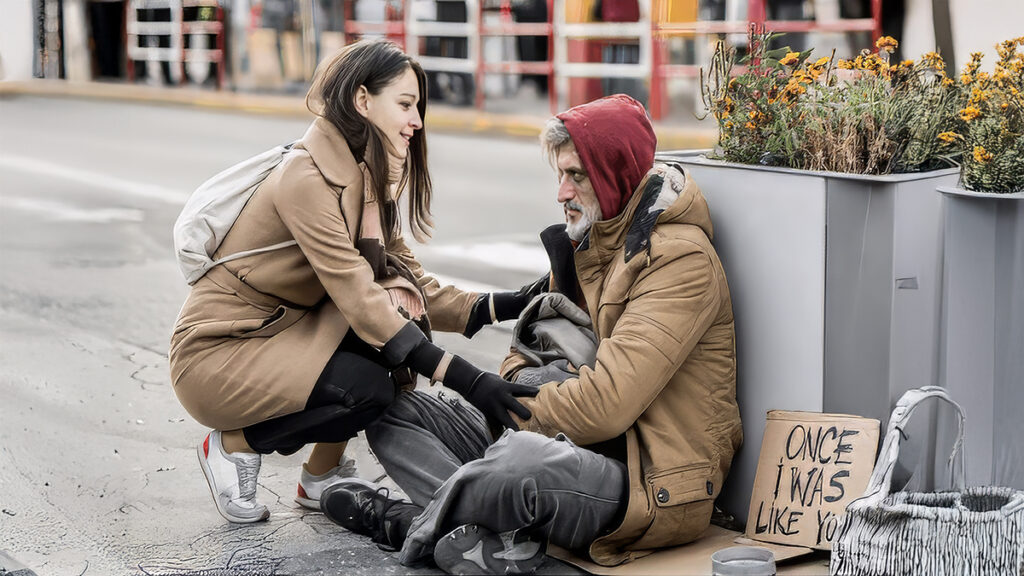
A homeless man sat on the step outside a Vinnies op shop packing his meagre possessions into a second-hand wheelie case he had just received. He dreaded the long walk back to the kiosk under which he slept last night.
Would it be safe? He was often hassled as he slept. But, where else could he go? Nowhere is safe when you are on the streets.
A young woman inside the shop (let’s call her Kylie) was intrigued by the way he continually unfolded, read and then refolded a piece of paper.
Bishops and parish clergy
Bishops and parish clergy hold their authority and office in trust from the people of their dioceses and parishes. How many bishops truly believe that Jesus founded the Christian church rather than stirred up a movement that became the church?
Peace and Faith - Reflection on the Second Sunday of Easter
Imagine the scene, John, the Gospel writer, in his house in Ephesus, has heard that after Jesus died his followers found a deep sense of peace and faith in the realisation that he still lived even after crucifixion on Calvary. How was he to write about this? This was around 70 years after it happened and he has heard various accounts of how it was back then but he wants to focus on two aspects in particular – the inner peace those early followers had and the faith that held them together. He did not have the conceptual language that we use today but he could, and did, wrap it up in a story. A story so good, it has captured hearts and imaginations ever since.
Evolving Catholic Spirituality
People of faith and church organisation
Distinguishing between the church organisation and people of faith reflects a growing reality in Australia.
The relevance and role of Catholicism, of the faith of Catholics, is changing. One feature is that Catholics increasingly base their living on a personal position or conviction rather than in conformity with an official church stance.
Features of the Future Church
Aim.
Set out the features of a church:
- That relates practically to the socio-cultural context of the 2020s.
- Is committed to dealing with the life-issues experienced by Catholics and offers effective solutions.
- Responds to the cries of Catholics for ongoing reform and renewal, offering –
- Practical solutions to the issues that continue to cause pain and grief, spiritual and mental suffering, relationship distortion and disruption, loss of faith and depression, and
- Inspiration and guidance for personal and community intentional, spiritual living.
Method in Spirituality
SACEC Winter Series July 2024
Spirituality sums up our living as integrated biological, sensitive, thinking, deciding and loving people. It is about how we bring together the various aspects of our lives, get our personal ‘ducks in a row,’ align what we do with what we know and believe, how we relate to everyone and everything else – family, friends, neighbours, the universe and God. This is spirituality.
Too many of us feel that Catholicism has lost its creative energy and credibility in the face of a changing world outside and scandals within. We are hanging on to a spirituality and theology that barely make sense while our organisational structures are outdated.
Where is Catholicism Heading?
Kevin Liston
July 2024
The future for Christianity in the Catholic tradition and for Teams will be through an evolution more profound and far-reaching than any in the last 2,000 years. The world, not just the church, is going through a deep and wide change of era. Central features include the revolution in the methods of science (evidence, data and systematic procedures), awareness of history (the changing progressive development of humanity), widespread loss of trust in institutions, authority and assured progress, disillusionment with the basis of authority (including religious), a growing awareness of personal autonomy and agency and a major shift of attention from the community and social to the personal in relation to how we live our lives.