Catholicism
in the 21st Century
Christianity is
evolutionary and dynamic
Jesus - Our Inspiration
Jesus was driven by his vision of the kin’dom of God, that is the world transformed by love and care as he dreamed and imagined it could be; his mission was to draw people into his perspective of love and care for one another.
He spent many years reflecting on his experience of life in Nazareth and Galilee, discerning his own truth, working out for himself what it was to be a fully authentic human being.
It is clear from all that followed that personal integrity, a strong relationship with God, whom he referred to as ‘Abba’ and a deep sense of purpose were foundational for his mission.
Early in his career, Jesus expanded his work of healing and teaching to formation of a community. Helping that community of disciples to bond, to understand what he was about and to share his vision was a constant preoccupation. That community of women and men became the core and foundation of the initial movement and later Church.
Community is at the heart of Christianity; the natural progression is from relationships and community to celebration. However, a preoccupation with liturgy and ritual has diverted attention from the fundamental exercise of mutual care, sharing, looking out for the marginalised and vulnerable (the ones lying in the ditch or sleeping rough).
Jesus’ dream of a kin’dom of God is to be realised in the hearts and lives (personal, social, economic and cultural) of the people of God (all of them). Celebrating it follows.
A new Christian narrative is emerging
A credible spirituality makes sense and moral living commands respect when it is seen to be grounded in intellectual integrity and lived authentically. Relying on the statements and claims of ‘authorities’ without supporting evidence is not good enough.
Everyday spirituality
Not everyone is settled. This is for the ones who are still looking.
Most spiritual formation assumes people already have a vocabulary for faith – a settled sense of belief, belonging, and direction. But many of us live somewhere else: drawn toward something we can’t quite name, unsettled by a hunger we don’t know what to do with, aware that the old answers don’t quite fit anymore but not yet sure what does.
The Story of everyday spirituality is a framework for that in-between place. It doesn’t ask you to arrive at certainty. It asks you to notice your own desire – and follow where it leads.
The shape of the journey
The Story is built around the Easter message – told as the pattern of loss and renewal, or death and rising, that sits at the heart of the Christian story, and, I suggest, at the heart of every genuine human transformation. It moves through four movements:
Seeker – the honest starting point. Restlessness, hunger, a sense that something is missing or calling.
Guide – the encounter with someone or something that helps make sense of the search – a person, a community, a text, a moment of insight.
Threshold – the place of decision. What has to be let go of in order to move forward?
New Spirit or Risen Presence – not an ending, but a new way of being present – to God, to others, to yourself – on the far side of that letting go.
This isn’t a technique for producing a spiritual experience. It’s a way of paying attention to a pattern that may already be unfolding in your life.
At the centre: Desire
A word worth sitting with. Many of us grew up with the language of external calling, obligation, or a vocation handed down from outside. Desire is interior: the deep, often quiet, sometimes disruptive longing that is already present within you, waiting to be noticed rather than assigned.
The Story takes this seriously as a starting point for spiritual growth and development – not “what are you supposed to want,” but “what do you actually desire, and what might that desire be pointing toward?”
The spirit you have received is not one of timidity
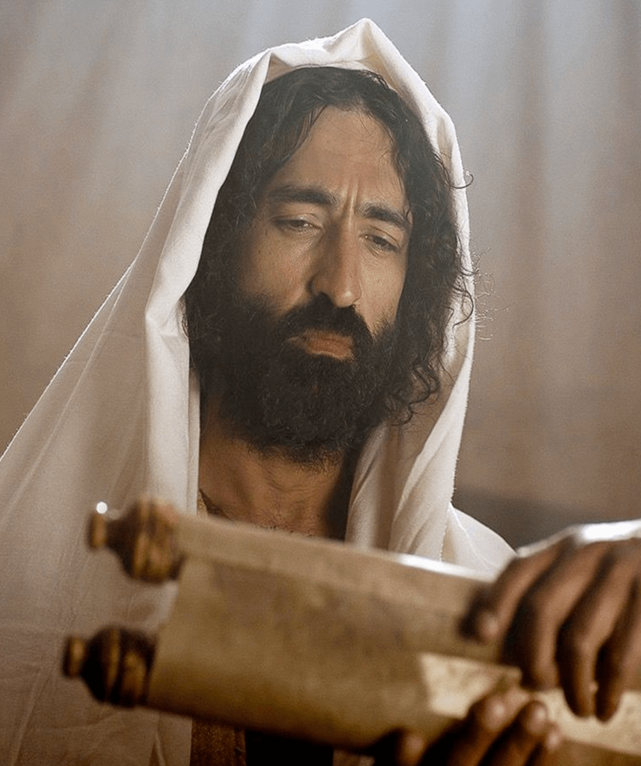
Jesus, disrupter of synagogues,
of simplistic interpretations of scripture
and of too-comfortable lifestyles.

I have come to bring -
Good news to the poor,
Liberty to captives,
Sight for the blind
And the fullness of life for everyone
ABOUT US
This website offers a perspective on Catholicism appropriate for the 21st century.
We live in an era characterised by an explosion of knowledge in relation to evolution and historical awareness, communications technology, the human sciences such as psychology, sociology, and anthrpology and interiority in philosophy and theology.

QUESTIONS?
Whether you’re curious about features of this website, issues it touches on or you have a question about Catholicism, we’re here to help.